
Why Is My Water Heater Not Producing Hot Water?
Running out of hot water is never convenient, and it is worse when the water never gets hot at all. In Salt Lake City, where hard water leaves sediment in every tank, a water heater that stops producing hot water often has a cause that has been building for months. Sometimes the fix is simple: a tripped breaker, a thermostat set too low, or a pilot light that has gone out. Sometimes it is a failed heating element, a worn thermostat, or a tank so full of sediment that the heat cannot reach the water. This guide explains the common causes for electric, gas, and tankless heaters, the safe checks you can do yourself, and when to call a professional.
First Checks You Can Do Safely
Start with the simplest checks, because they solve a surprising number of no-hot-water calls. On an electric heater, check the breaker panel for a tripped breaker and reset it once if it has tripped. On a gas heater, make sure the gas supply is on and the control knob is set correctly. Check the thermostat setting on the unit itself: if it has been turned down, knocked, or set too low, the water will stay lukewarm. Also check whether other gas appliances in the home are working, which tells you whether the gas supply is the problem.
Next, think about timing and demand. A tank heater that has just been used for several showers in a row may simply need time to reheat, and the recovery time can be an hour or more for a large tank. If the hot water runs out faster than it used to, or never gets hot at all, the problem is in the heater rather than in demand. Listen for sounds from the tank as well: a rumbling or popping sound points to sediment, while silence from a heater that should be running points to an element, thermostat, or burner fault.
Electric Heaters: Elements & Thermostats
An electric water heater has two heating elements, one near the top and one near the bottom of the tank, and two thermostats that control them. When the lower element fails, the heater can only warm the water at the top, so you get a short burst of hot water followed by cold. When the upper element or thermostat fails, you may get no hot water at all. Elements fail because of age, because sediment has buried them, or because they have burned out after running dry, and they are the most common cause of no hot water in an electric heater.
Thermostats fail too, and a faulty thermostat can keep the elements switched off even though the water is cold. A tripped high-limit switch, which cuts power when the tank overheats, can also leave the heater silent. Resetting that switch may restore heat, but if it trips again, the thermostat is likely faulty and the heater needs professional attention. Testing elements and thermostats involves the electrical supply to the unit, so diagnosis and replacement belong to a professional rather than a homeowner with a multimeter and a guess.
Gas Heaters: Pilot & Burner
A gas water heater needs its pilot light lit before the burner can heat the water. If the pilot has gone out, relighting it according to the instructions on the unit may restore hot water, but a pilot that will not stay lit points to a faulty thermocouple, a dirty pilot assembly, or a problem with the gas supply. The thermocouple is a safety device that shuts the gas off if the pilot goes out, and when it wears out it can shut the gas off even when the pilot is lit properly.
If the pilot is lit and the burner still does not fire, the gas control valve or the thermostat may be at fault. A burner that lights but makes a yellow or lazy flame, rather than a steady blue one, is not burning cleanly and should be checked. If you smell gas near the water heater, do not try to relight it: leave the house and call your gas utility's emergency line or 911. Gas burner work involves both the gas supply and the flue that carries exhaust out of the home, so it should be left to a professional.
Sediment & Hard Water
Sediment is the leading cause of water heater trouble in Salt Lake City, because the valley's water is hard and leaves mineral deposits in every tank. Over time, sediment settles on the bottom of the tank in a thick layer that insulates the water from the burner or the heating element. The heater has to run longer and hotter to warm the same water, which raises energy use, makes the tank noisy, and shortens its life. A rumbling or popping sound from the tank is the classic sign of sediment boiling beneath the water.
Flushing the tank removes loose sediment and helps the heater recover, but a tank that has never been flushed may have sediment that has hardened into a solid layer. Regular flushing, once or twice a year depending on the water, keeps the build-up manageable and protects the heating elements and the tank itself. A water softener or filter can slow sediment down at the source. If the tank is old and the sediment is heavy, flushing may reveal leaks that the sediment was plugging, which is a sign the tank is near the end of its life.
Tankless: No Hot Water Causes
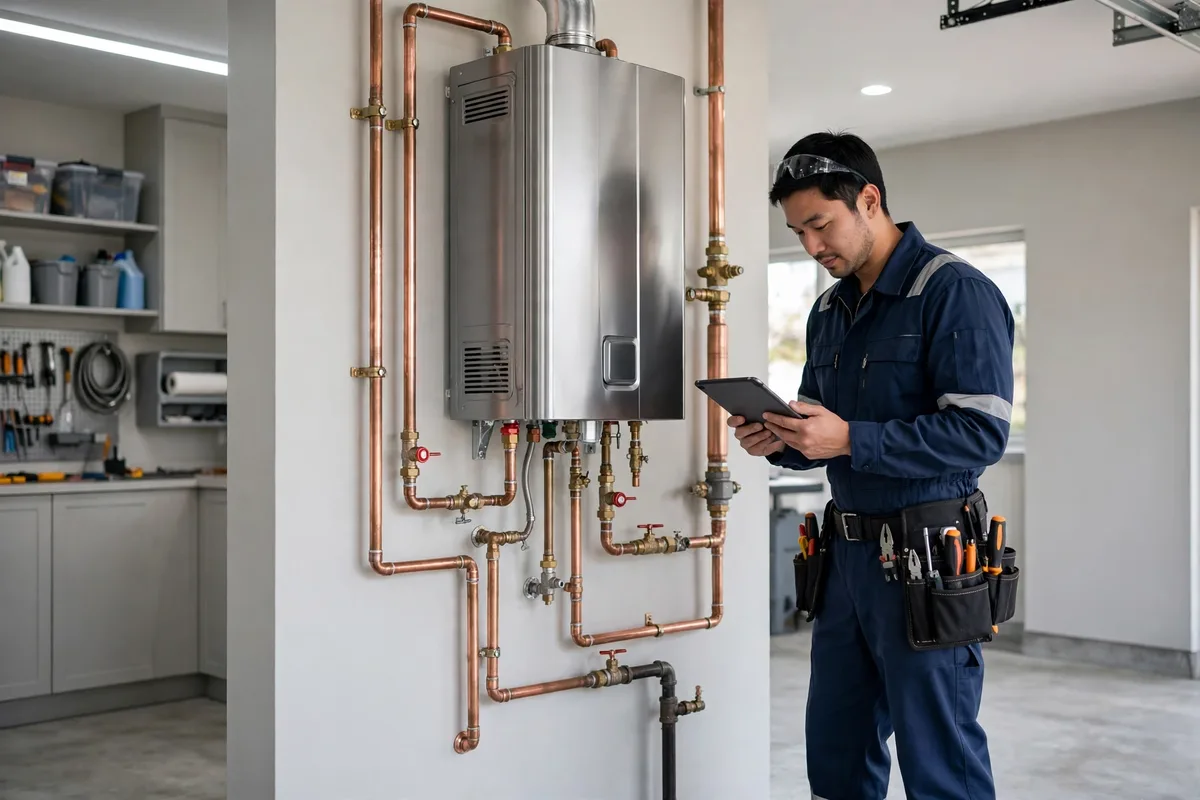
A tankless water heater that produces no hot water has a different set of causes from a tank model. The most common is a flow problem: tankless units need a minimum flow of water before they fire, so a clogged inlet filter, a partially closed valve, or low water pressure can leave the unit silent. A unit that fires and then shuts off may have a dirty heat exchanger, a faulty flow sensor, or an ignition problem, and the error code on the display, if there is one, will point toward the cause.
Hard water affects tankless units even more sharply than tank models, because the heat exchanger has narrow passages that scale can block. In Salt Lake City, a tankless heater that has never been descaled will lose heating power gradually and may eventually stop producing hot water altogether. Regular descaling is part of owning a tankless unit here, not an optional extra. If the unit shows an error code, has no power, or smells of gas, switch it off and call a professional rather than resetting it again and again.
Frequently Asked Questions
Why does my water heater keep losing its pilot light or its heat?
On a gas model, a pilot that will not stay lit can mean a faulty thermocouple, a dirty pilot assembly, or a gas supply problem. On an electric model, the equivalent problem is a failed element or thermostat. Either way, if relighting or resetting does not hold, the part needs testing by a professional, because it involves the gas burner or the electrical supply.
Why does my hot water run out faster than it used to?
The most common cause is simply running out of stored hot water, because a tank can only hold so much. A family that has grown, a new large tub, or back-to-back showers can outrun a tank that was sized for a smaller household. If the shortage is new and the household has not changed, a failed element, a thermostat fault, or heavy sediment is more likely.
Is it safe to keep using a water heater that is leaking?
No. A tank water heater should be switched off at the breaker or the gas control if it is leaking, because water near electrical parts or a gas burner is a safety risk. Place towels or a tray to catch the water, avoid standing in pooled water near the unit, and call a professional. A leaking tank usually cannot be repaired and will need replacing.
How much sediment is normal in a Salt Lake City water heater?
A small amount of sediment is normal in any tank, but heavy build-up is a real problem in the valley because of hard water. Sediment settles on the bottom of the tank, insulates the water from the burner or element, and makes the heater work harder and noisier. Regular flushing removes it, and a softener or filter can slow it down.