
Tankless vs Traditional Water Heaters
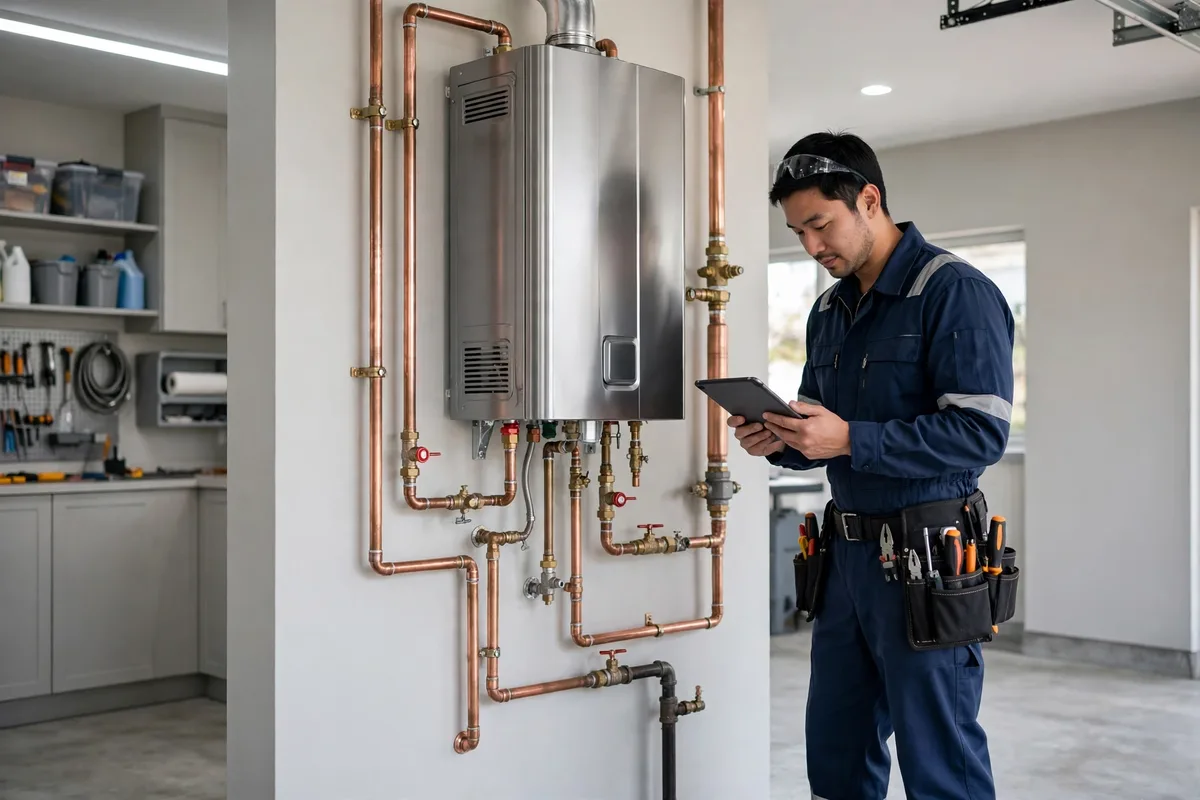
Choosing a water heater is a decision most homeowners make once a decade or so, and the choice between tankless and traditional has become the main question. A traditional tank stores hot water ready to use, while a tankless unit heats water only when a tap opens. Each has real advantages, and each has drawbacks that matter more in some homes than others. In Salt Lake City, hard water adds a local twist that belongs in the decision. This guide compares how each system works, what they cost to run, how long they last, and which fits different homes.
How Each System Works
A traditional water heater is a storage tank, usually holding a large volume of water that is kept hot around the clock. A gas burner or electric elements heat the water, a thermostat keeps it at the set temperature, and hot water flows to the taps as it is used, with cold water entering the tank to replace it. The system is simple, proven, and easy to understand, which is why it remains the most common type in valley homes. Its main limit is capacity: once the stored hot water is used, the household waits for the tank to reheat.
A tankless water heater has no storage tank. When a tap opens, water flows through a heat exchanger, a powerful burner or element heats it instantly, and hot water reaches the tap within seconds. When the tap closes, the unit switches off. Because it heats water only when it is needed, a tankless unit never runs out of hot water, provided it is sized correctly for the household's peak demand. The trade-off is complexity: a tankless unit needs a minimum flow to fire, and it has more controls, sensors, and safety devices than a simple tank.
Upfront vs Running Costs
A traditional tank usually costs less to buy and install than a tankless unit, because the equipment is simpler and the installation is often a direct replacement of the existing tank. A tankless unit costs more upfront, and the installation may also need a larger gas line, a new vent, or an electrical upgrade, depending on the home. Those installation differences can matter as much as the price of the unit itself, so a quote for a tankless installation should include everything the home needs, not just the heater.
Running costs run the other way. A tank keeps water hot all day, which uses energy even when nobody is home, while a tankless unit only heats water when a tap opens, so it avoids that standing loss. How much that saves depends on the household's hot water use: a large family that uses a lot of hot water will notice a bigger difference than a single person who uses very little. The honest comparison is the total cost over the life of the system, including maintenance, not the purchase price alone.
Lifespan & Maintenance
A traditional tank generally lasts around a decade, sometimes longer with regular flushing and care, but the tank itself eventually corrodes from the inside and begins to leak. When a tank leaks, it cannot be repaired and must be replaced. A tankless unit generally lasts longer, because it has no tank to corrode, and its heat exchanger can be descaled and its parts replaced individually. That longer life is one of the main reasons homeowners choose tankless, even with the higher upfront figure.
Maintenance differs between the two as well. A traditional tank needs regular flushing to remove sediment, an anode rod that is checked and replaced when worn, and a temperature and pressure relief valve that is tested. A tankless unit needs regular descaling, a clean inlet filter, and periodic checks of its sensors and venting. Neither system is maintenance-free, and in Salt Lake City the hard water makes maintenance more important for both, but especially for tankless units, where scale can narrow the heat exchanger passages.
Hard Water: The Salt Lake Factor
Hard water is the local factor that most affects this decision. Salt Lake City water leaves mineral deposits in every water heater, and those deposits behave differently in a tank than in a tankless unit. In a traditional tank, sediment settles on the bottom, insulates the water from the heat source, and makes the heater work harder and noisier. Regular flushing removes loose sediment and keeps the problem manageable, and the anode rod protects the tank itself from corrosion.
In a tankless unit, scale coats the narrow passages of the heat exchanger, reducing heating power and eventually blocking flow altogether. Descaling is a real, recurring cost of tankless ownership here, and a unit that is never descaled will lose performance steadily until it stops producing hot water. A water softener or filter can slow scale down for either system, but it is almost essential for a tankless unit in the valley. Any tankless quote for a Salt Lake City home should include the descaling schedule and what it involves.
Which Fits Your Home?
A traditional tank fits homes with modest hot water use, a tight budget, or a simple replacement need. If the household rarely uses more than one hot water tap at a time, if the existing tank location and connections are sound, and if the family is happy with the hot water it has, a new tank is the straightforward choice. It is also the simpler choice for a home where the gas line or electrical supply cannot easily support a tankless unit without major work.
A tankless unit fits homes that run out of hot water often, that have large families or large tubs, or that want hot water on demand rather than stored. It suits a household that is willing to keep up with descaling and that values the longer life and the energy savings of heating water only when it is needed. The right choice depends on the household's hot water habits, the home's gas and electrical capacity, and a realistic view of the maintenance each system needs in the valley's hard water.
Frequently Asked Questions
Can a tankless water heater supply two showers at once?
A tankless unit can usually supply several taps at once if it is sized correctly, but it has a limit on how much hot water it can heat at one time. Two showers and a dishwasher running together may exceed a smaller unit, especially in winter when the incoming water is colder. Correct sizing for the household's peak demand is what prevents this problem.
Does a tankless water heater use less energy than a tank?
A traditional tank keeps a full tank of water hot all day, which uses energy even when nobody is home. A tankless unit only heats water when a tap opens, so it avoids that standing loss. How much difference that makes depends on the household's hot water use: a home that uses a lot of hot water will see a bigger gain than a home that uses very little.
Does hard water affect a tankless heater more than a tank?
Yes, and in Salt Lake City it is the maintenance item that matters most. Scale from hard water narrows the heat exchanger passages and reduces heating power over time, so a tankless unit here needs descaling on a regular schedule. A traditional tank also suffers from sediment, but it can be flushed more simply and its parts are easier to reach.
When is a traditional tank the better choice?
A traditional tank is usually the simpler choice for a home with modest hot water use, a tight budget, or a small space with easy access to the existing tank. It is also the simpler choice when the household rarely uses more than one hot water tap at a time. A tankless unit suits homes that run out of hot water often or want hot water on demand rather than stored.