How Often Should HVAC Systems Be Serviced?
It is easy to forget about the heating and cooling system when it is working, and easy to regret that when it stops on the hottest or coldest week of the year. Salt Lake City asks a lot of its HVAC equipment: hot, dry summers followed by cold winters, dust from inversion season, and long heating runs through the cold months. A steady service rhythm is the simplest way to keep that equipment in good shape. This guide explains how often each part of your system should be serviced, what each visit covers, and what happens when service is skipped year after year.
The Twice-a-Year Rhythm
The standard rhythm for a home with a separate furnace and air conditioner is two service visits a year, one in spring and one in fall. Spring service prepares the cooling side before the summer heat arrives, and fall service prepares the heating side before the cold sets in. Spacing the visits this way means each part of the system is checked close to the season when it will work hardest, which is when a small fault is most likely to become a breakdown.
This rhythm also fits the way Salt Lake City weather changes. Spring visits happen before the first sustained heat, when the AC has been idle all winter and dust has settled on the coils. Fall visits happen before the heating season, when the furnace has been idle all summer and needs its burners, ignition, and safety controls checked. Homes with a heat pump follow a similar rhythm, since the same equipment handles both seasons and therefore works all year.
AC: Spring Service
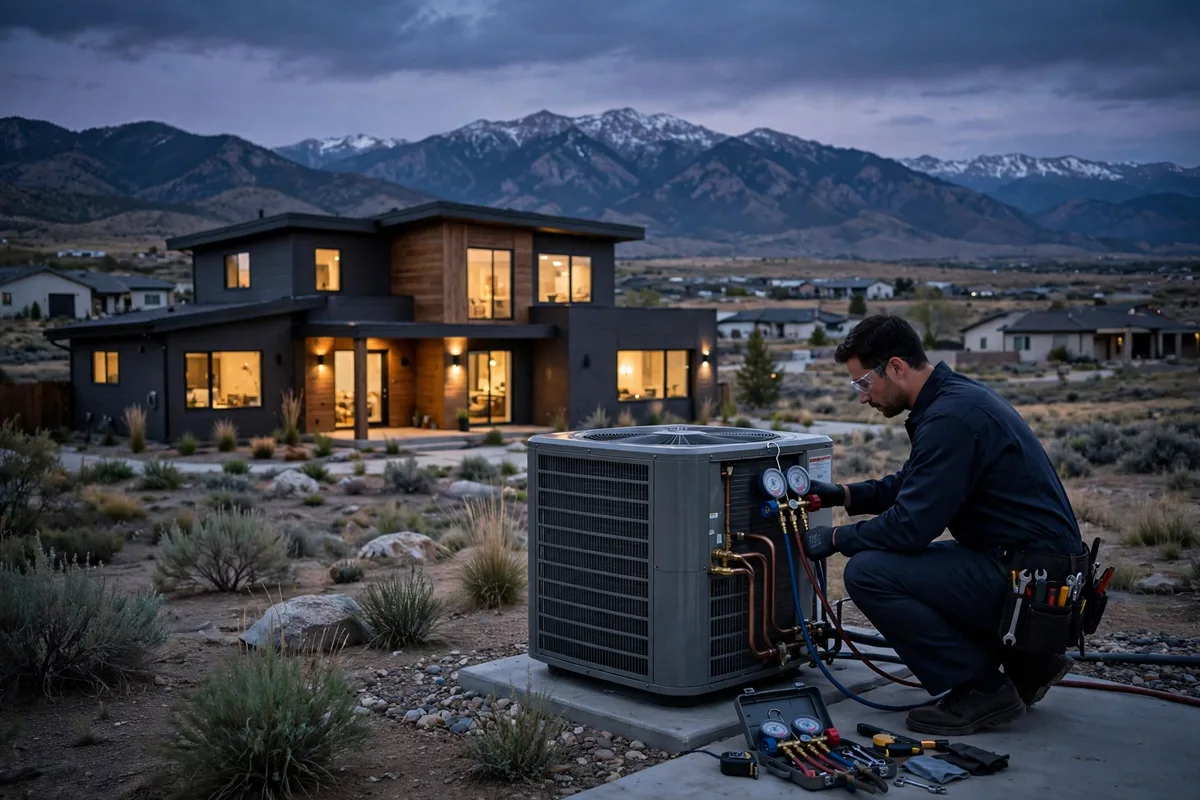
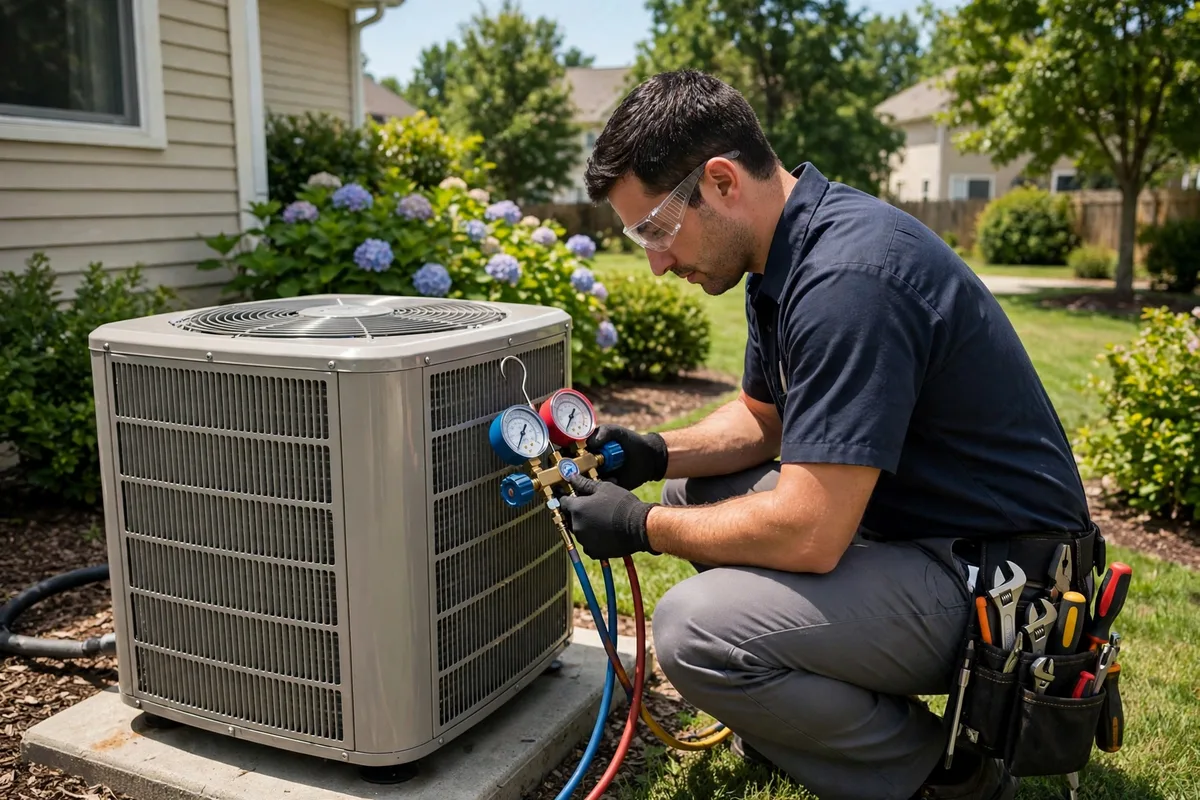
Spring AC service focuses on cooling performance and airflow. A technician will clean the outdoor and indoor coils, check the refrigerant charge, test the capacitor and contactor, inspect the condensate drain, and confirm that the blower is moving air as it should. The thermostat is checked for accuracy, and the electrical connections are inspected for wear or heat damage. Each of these steps addresses a fault that could otherwise show up as weak cooling on the first hot weekend of summer.
Spring is also the right time to look at the outdoor unit itself. Winter leaves debris around the condenser, and cottonwood fluff and dust in late spring can coat the coil quickly. Clearing the area around the unit and cleaning the coil helps the system shed heat properly, which matters at Salt Lake City's elevation, where thin air already makes the compressor work harder. A spring visit that finds a low refrigerant charge or a worn capacitor can prevent a far more disruptive failure in July.
Furnace: Fall Service
Fall furnace service focuses on safe, steady heating. A technician will inspect the burners, check the ignition system and flame sensor, test the safety controls, and look at the heat exchanger for signs of wear. The filter is replaced, the blower is checked, and the thermostat is tested to make sure the furnace responds correctly to a call for heat. These checks matter because a furnace fault can mean no heat on a cold night, and some faults, such as a cracked heat exchanger, carry safety risks as well as comfort ones.
Fall service is also when carbon monoxide safety is checked. Detectors should be tested and replaced when they reach the end of their life, and the furnace flue should be clear so exhaust gases leave the home properly. A fall visit is the right moment to sort these things out, while the weather is still mild and there is time to act on anything the inspection finds. Waiting until the first cold snap leaves no margin if a part needs ordering.
Heat Pumps: Year-Round Care
Heat pumps deserve the same twice-a-year rhythm, because they do the work of both a furnace and an air conditioner. A spring visit prepares the cooling side, checking coils, refrigerant, and airflow, while a fall visit prepares the heating side, checking the defrost cycle, the reversing valve, and the auxiliary heat. Because the same compressor runs in both seasons, wear accumulates faster than on a system that rests for half the year, which makes regular checks more valuable rather than less.
Utah winters add their own reason for fall heat pump service. Snow, ice, and cold nights test the defrost cycle, and a heat pump that cannot defrost properly will ice up and lose heating capacity. Checking the outdoor unit for clearance, the drain path for ice, and the defrost controls before winter gives the system its strongest chance of steady heating. A spring visit then clears away winter debris and prepares the same unit for the cooling season ahead.
What Skipping Service Costs
Skipping service rarely causes a sudden failure on its own. What it does is let small problems grow quietly: a dirty coil slowly reduces cooling, a worn part slowly weakens, and a clogged drain slowly fills until it overflows. By the time the symptom appears, the fix is often larger than the service visit that would have caught it. Dust from inversion season, hard-water sediment in water heating equipment, and the general wear of long heating and cooling runs all build up faster when nobody is looking.
The cost of skipping service shows up in other ways too. A system that has not been cleaned or checked runs less efficiently, so it uses more energy to deliver the same comfort. Filters left unchanged for months restrict airflow and strain the blower. A furnace that has not been inspected can develop safety issues that go unnoticed. Regular service does not prevent every breakdown, but it shifts the odds strongly in your favour by catching the small, cheap problems before they become large, expensive ones.
Frequently Asked Questions
Do I need HVAC service every year if my system is new?
Yes. A new system still collects dust, still has parts that wear, and still needs its safety controls and refrigerant charge checked. Annual or twice-yearly service also creates a record of care, which helps if a fault appears later. New equipment is not immune to clogged filters, dirty coils, or loose connections.
Is spring or fall the more important service visit?
Neither is more important, because each one prepares a different half of the system. Spring service protects your cooling, and fall service protects your heating and your safety. If you can only manage one visit in a year, choose the season for the equipment you rely on most, but the twice-a-year rhythm is the one that covers both.
What should I do between service visits?
Check and replace the filter regularly, keep the outdoor unit clear of debris and plants, and keep vents open and unblocked inside the home. Listen for new noises and watch for uneven temperatures or rising energy use, and note anything unusual to mention at the next visit. These simple habits do a lot of the work between professional visits.
How do I know if my system has been skipped too long?
Signs include weak airflow, rooms that never reach the set temperature, new noises, higher energy use, and dust or smells from the vents. A system that has gone several years without service may also have a heavily clogged filter or a coil coated in grime. A service visit will show what needs attention and what can wait.