
Why Does My Heat Pump Go Into Defrost Mode?
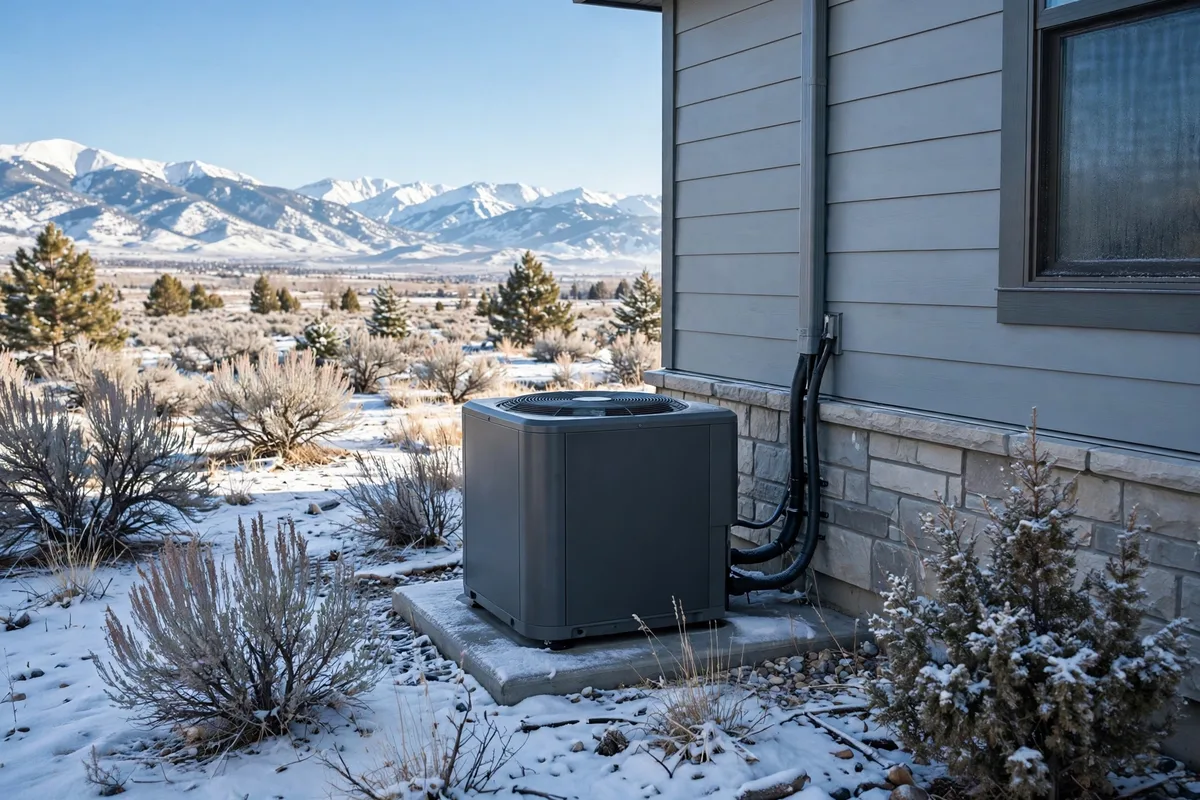
On a cold Utah morning, you may notice your heat pump doing something odd: the outdoor fan stops, a puff of steam rises from the unit, and the air from the vents feels cooler for a few minutes. The system has gone into defrost mode, and it is doing exactly what it is supposed to do. Defrost is how a heat pump clears the frost and ice that builds up on its outdoor coil in winter, and without it the system would ice up and stop heating. This guide explains what defrost mode is, when it is normal, and when it is a sign of a problem.
What Defrost Mode Is
Defrost mode is a short cycle in which the heat pump reverses itself to melt frost and ice from its outdoor coil. In heating mode, the outdoor coil is colder than the outside air, because it is pulling heat out of that air, and moisture in the air freezes onto the coil as frost. A thin layer of frost is harmless, but a thick layer insulates the coil and blocks airflow, so the system cannot pull heat from the air properly. Defrost mode clears that layer before it becomes a problem.
During defrost, the heat pump briefly switches to cooling mode, sending warm refrigerant to the outdoor coil to melt the ice. The outdoor fan usually stops, the indoor air may feel cooler for a few minutes, and a puff of steam or vapour may rise from the outdoor unit as the ice melts and evaporates. The cycle typically lasts only a few minutes, and once the coil is clear the system switches back to heating. The whole process is automatic, controlled by a sensor and a timer, and the homeowner does not need to do anything to start it.
When Defrost Mode Is Normal
Defrost is normal in cold weather, especially on damp days when frost forms fastest on the outdoor coil. A heat pump in Salt Lake City will defrost more often in the coldest weeks of winter, and it may defrost several times a day when the air is cold and damp. Each cycle lasts only a few minutes, the ice clears, and the system returns to steady heating. A brief dip in the indoor air temperature during defrost is normal too, because the system is briefly sending heat outside rather than inside.
The pattern to expect is occasional, short cycles with clear heating in between. A heat pump that defrosts, clears its coil, and then heats steadily for a long stretch before defrosting again is working as it should. Utah's dry cold means frost forms more slowly on many winter days than it would in a damp climate, so defrost may be less frequent here than a homeowner who has lived elsewhere might expect. Snow and ice around the outdoor unit can make defrost more frequent, which is why keeping the area clear helps.
Signs of a Defrost Problem
Defrost becomes a problem when the pattern changes. A heat pump that goes into defrost every few minutes, or that stays in defrost for a long time without clearing the ice, usually has a fault in the defrost controls, the sensor, or the reversing valve. A system that defrosts constantly wastes energy, heats poorly, and puts extra strain on the compressor, because it is spending more time clearing ice than heating the home. If the cycles are frequent and the heating is weak, the defrost system itself needs attention.
Other signs point the same way. A heat pump that never goes into defrost, even when the coil is visibly iced over, has a sensor or control fault that is preventing the cycle from starting. A system that makes loud noises, trips a breaker, or stops heating altogether during or after defrost has a fault that should be checked promptly. In each case, the defrost cycle is a symptom rather than the cause, and the underlying fault is in the controls or the components that run the cycle.
Icing vs Normal Frost
Normal frost is a thin, even layer on the outdoor coil that appears on cold days and clears during defrost. It looks like a light dusting, it does not block the coil fins, and it disappears after a defrost cycle. A heat pump with normal frost heats steadily, defrosts occasionally, and shows no ice on the refrigerant lines or the base of the unit. This is the pattern to expect through a Utah winter, and it needs no action from the homeowner beyond keeping the area around the unit clear.
Icing is different. A thick layer of ice that covers the coil, blocks the fins, and does not clear during defrost is a problem, as is ice that builds up on the base of the unit or on the refrigerant lines. Ice that forms because the drain path is blocked, because snow is piled against the unit, or because the defrost controls have failed will keep growing until the system cannot heat at all. If the ice does not clear after a defrost cycle, or if it returns within minutes, switch the system off and call a professional rather than letting it run.
When to Call a Professional
Call a professional if the heat pump defrosts constantly, if the ice never clears, or if the system stops heating after a defrost cycle. A defrost problem that is left running can damage the compressor, because the system is working against a blocked coil and cycling its controls far more often than it should. A technician can test the defrost sensor, the control board, and the reversing valve, and can tell you whether the fault is a single part or a sign of wider wear in the system.
Also call for help if you notice ice that will not clear, a burning smell, or a breaker that trips during defrost. Do not try to chip ice off the coil yourself, because the fins are delicate and easy to damage, and do not pour hot water on the unit, because the sudden temperature change can crack parts. Clearing snow and debris from around the unit is a safe homeowner job; anything involving the controls, the sensor, or the refrigerant belongs to a professional.
Frequently Asked Questions
My heat pump keeps going into defrost over and over. Is that a problem?
A heat pump that runs defrost cycles back to back, or that stays in defrost for a long time without clearing the ice, usually has a fault in the defrost controls, the sensor, or the reversing valve. Switch the system off, clear any snow or debris from around the outdoor unit, and call a professional if the pattern continues. Running the system in that state wastes energy and can damage the compressor.
Should I clear snow away from the outdoor unit in winter?
Yes, and it is a useful habit in a Utah winter. Snow piled against the outdoor unit blocks airflow and makes the coil ice up faster, which forces the system into defrost more often. Keep the area around the unit clear, and make sure the drain path below the unit is not blocked by ice. A clear unit defrosts less often and heats more steadily.
Is steam from the outdoor unit normal during defrost?
A little steam or a wisp of vapour from the outdoor unit during defrost is normal, because the ice on the coil is melting and the water is evaporating. It should stop when the defrost cycle ends. Smoke, a burning smell, or steam that continues after the cycle ends is not normal and deserves a check.
Does defrost happen more on damp days than on dry days?
Defrost cycles are most common on cold, damp days, when frost forms fastest on the outdoor coil. On very cold, dry days, frost forms more slowly and defrost may happen rarely. A heat pump that defrosts often on a dry, sunny winter day may have a sensor or control problem rather than a frost problem.