
Why Is My Furnace Blowing Cold Air?
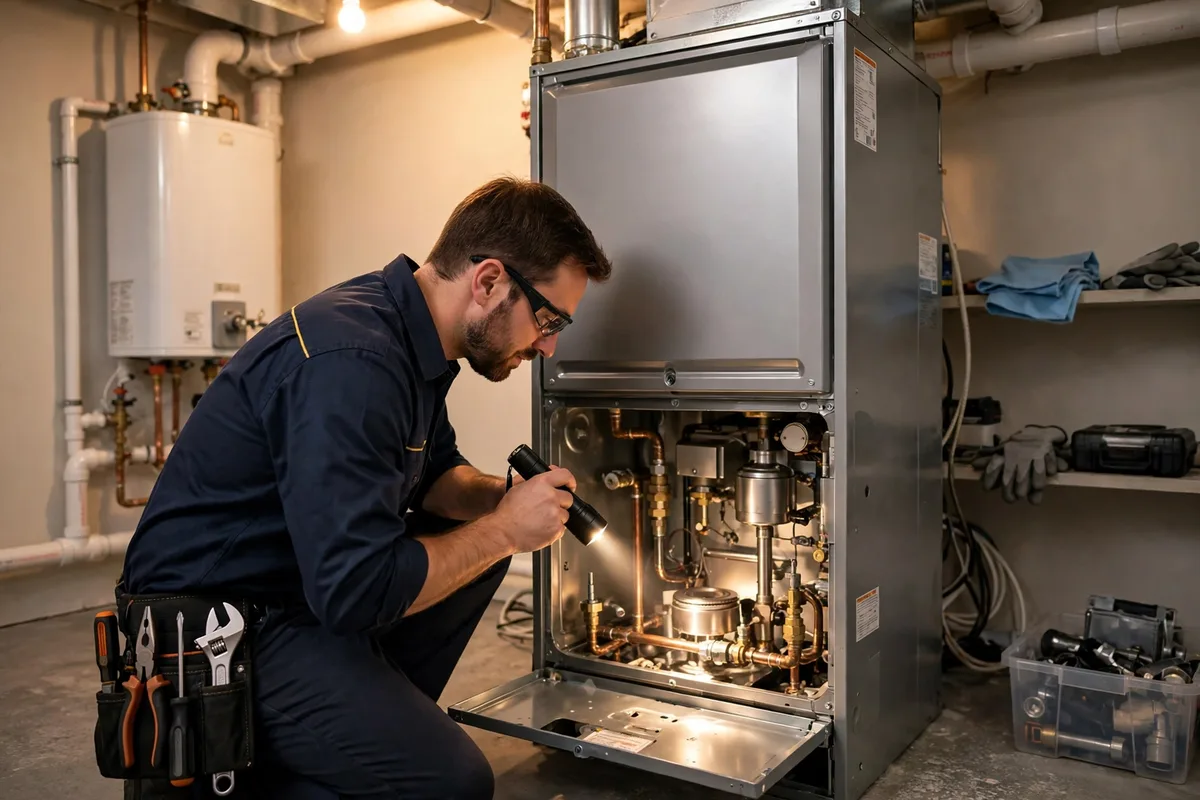
There is little more unwelcome on a cold Salt Lake City evening than a furnace that runs and runs while the air from the vents stays cold. The system sounds as though it is working, the blower is moving air, and yet the house gets no warmer. Often the cause is simple: a thermostat set wrong, a fan running when it should not be, or a filter so clogged that the furnace cannot heat the air properly. In other cases the burner is not lighting at all, and that needs a professional. This guide explains the common causes, the safe checks you can do yourself, and the warning signs that mean you should leave the house and get help.
First Checks You Can Do Safely
Start with the thermostat, because it is the most common cause and the easiest to fix. Make sure it is set to heat, not cool or fan only, and that the set temperature is above the current room temperature. If the fan is set to on, the blower will run all the time and push unheated air through the vents between heating cycles; switching the fan to auto usually solves this at once. Check that the thermostat has power and that its batteries are fresh if it uses them.
Next, look at the filter. A filter clogged with dust from inversion season can restrict airflow so much that the furnace overheats and shuts the burner down as a safety measure, leaving the blower to circulate cold air. Hold the filter up to the light and replace it if you cannot see light through it. Also walk through the house and confirm that supply vents are open and not blocked by furniture, rugs, or closed doors, since blocked vents can cause the same overheating and shutdown.
Thermostat Settings
Thermostat settings cause more cold-air complaints than any other single factor. A system left on cool after the summer, or a fan left on after a change of seasons, will behave exactly as though the furnace is broken. A thermostat placed near a heat source, in direct sunlight, or above a lamp reads a warmer temperature than the rest of the house and may shut the heating down too early, leaving distant rooms cold while the hallway feels fine.
A thermostat with loose wiring or a failing sensor can also send the wrong signal, calling for heat at the wrong times or not at all. If the display is blank, flickering, or showing a temperature that clearly does not match the room, the thermostat itself may be the fault rather than the furnace. Before assuming the equipment has failed, confirm the mode, the set temperature, the fan setting, and the thermostat's own power supply.
Ignition & Flame Sensor
If the thermostat and filter are fine, the next likely cause is the ignition system. Modern furnaces use an electronic igniter or hot surface igniter rather than a standing pilot light, and when that part fails the burner never lights. You may hear the furnace try to start, with the blower running and a clicking sound, but no heat follows. The system will usually try a few times and then lock itself out as a safety measure, which is why repeated restarts do not help.
The flame sensor is another common culprit. This small rod sits in the burner flame and tells the control board that the burner has lit. When it is coated with soot or corrosion, it cannot sense the flame, so the control board shuts the gas off as a safety precaution. The burner lights for a few seconds and then goes out, over and over. Cleaning or replacing a flame sensor is a routine job for a technician, but it is not a homeowner repair, because it involves the gas burner and its safety controls.
Airflow & Filter Problems
Airflow problems can make a working furnace blow cold air. A clogged filter is the most common, but ductwork matters too. In older Avenues homes, duct runs may be undersized, leaky, or partially blocked, which starves some rooms of warm air while the furnace itself works fine. A blower fan that is dirty or failing moves less air, and a blower that runs too fast can push air through the heat exchanger before it has warmed up, so the air feels cool at the vent even though the furnace is heating.
Blocked return vents cause a similar problem by choking the air the furnace needs to heat. Make sure return vents are not covered by furniture or curtains, and that every room with a supply vent also has a clear path for air to return. If the filter is clean, the vents are open, and the air is still cold, the problem is more likely in the burner or controls than in the airflow, and a technician should inspect the system.
When It Is an Emergency
Some cold-air situations are emergencies, and the most important is the smell of gas. If you smell gas, or a rotten-egg odour, near the furnace or anywhere in the home, leave the house at once. Do not switch lights or appliances on or off, do not light anything, and do not go back inside to look for the source. Once you are outside and safely away from the house, call your gas utility's emergency line or 911. A gas leak is not something to investigate from inside the home.
Carbon monoxide is the other emergency to watch for. Headaches, dizziness, nausea, or confusion while the furnace is running, especially if several people feel ill at the same time, are warning signs. Leave the house, get fresh air, and call 911. Make sure carbon monoxide detectors are fitted near sleeping areas and tested regularly, because this gas has no smell and no colour. A furnace that blows cold air and also shows these symptoms should be switched off and left alone until a professional has inspected it.
Frequently Asked Questions
My furnace blows cool air for a minute before it warms up. Is that normal?
Often it is normal for the first minute or two, while the heat exchanger warms up and the blower starts moving air. If the air stays cool after several minutes and the house is not warming, something is wrong. Check the thermostat setting and the filter first, and if those are fine, the burner or ignition may not be lighting.
Can the fan setting on my thermostat cause cold air?
It can. The fan setting tells the blower to run all the time, and between heating cycles it pushes unheated air through the vents. Switching the fan to auto means the blower only runs while the furnace is actively heating, so the air from the vents feels warm rather than cool. This is one of the most common causes of cold air from a healthy furnace.
How long should it take for the air to feel warm after the furnace starts?
No. Once the blower starts, air should reach the set temperature within a few minutes. Air that stays cool for a long time points to a fault in the burner, the ignition, or the airflow. If the filter is clean and the thermostat is set correctly, a technician should inspect the ignition system and the safety controls.
What should I check first if my furnace starts but the air stays cold?
Check the filter, make sure vents are open, and confirm the thermostat is set to heat with the fan on auto. If the furnace tries to start and fails, or starts and stops repeatedly, switch it off and call for help rather than trying again and again. Repeated failed starts can stress the ignition parts and should be left to a professional.