
Why Is My AC Running But Not Cooling?
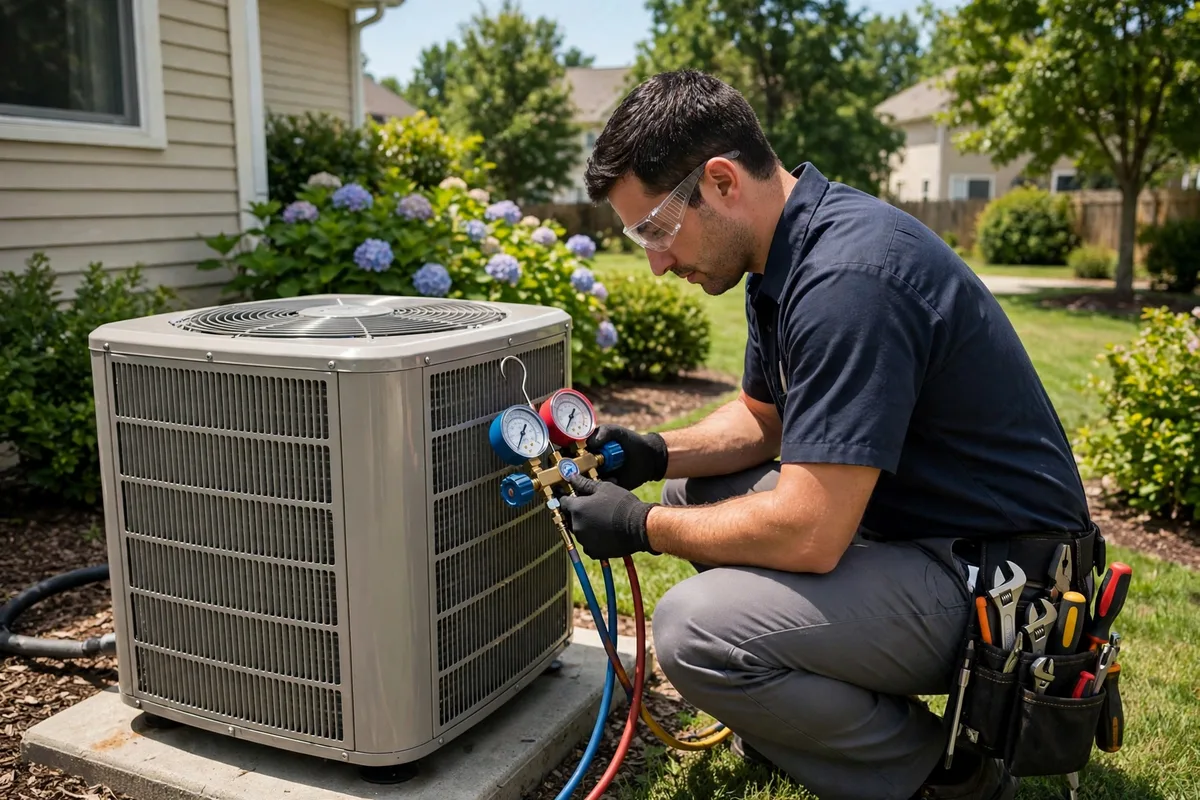
Few things are more frustrating on a hot Salt Lake City afternoon than an air conditioner that hums along without cooling the house. The fan is running, the outdoor unit is spinning, and yet the air from the vents feels no cooler than the room itself. This is one of the most common cooling complaints in the valley, and it has several possible causes, from a simple thermostat setting to a refrigerant leak. This guide walks through the checks you can do safely yourself, explains the main causes in plain language, and shows when it is time to stop troubleshooting and call a professional.
First Checks You Can Do Safely
Start with the thermostat. Make sure it is set to cool rather than heat or fan only, and that the set temperature is below the current room temperature. A thermostat left on fan only will circulate room-temperature air all day without ever cooling it, which is a common mistake after a season change. Check that the thermostat has power and that its batteries, if it uses them, are fresh, since a weak thermostat can send confused signals to the system.
Next, look at the filter and the vents. A filter clogged with dust, pet hair, and the fine grit that drifts in during inversion season can choke airflow so badly that the system cannot move enough cool air through the house. Hold the filter up to the light: if you cannot see light through it, replace it. Walk through the house and confirm that supply vents are open and not blocked by furniture or rugs, and that the outdoor unit has clear space around it with no leaves or debris pressed against the coils.
Airflow Problems
Airflow is the most common reason an AC runs without cooling. When air cannot move freely through the system, the indoor coil gets too cold and can freeze over, which blocks airflow even further and stops cooling altogether. A frozen coil often shows up as weak airflow from the vents, ice visible on the refrigerant lines near the indoor unit, or water pooling once the ice starts to melt. If you see ice, switch the system off and let it thaw fully before it is run again.
Duct problems can cause the same symptom in a different way. Leaky or disconnected ductwork, especially in older Avenues homes with aging duct runs through attics and crawl spaces, can lose cooled air before it ever reaches the rooms. A blower fan that is dirty or failing moves less air, and closed vents in unused rooms raise pressure in the rest of the system. Each of these reduces the cool air that reaches your living space, even while the outdoor unit works hard.
Refrigerant & Coil Issues
Refrigerant is the substance that carries heat out of your home, and the system is sealed, so a low charge means there is a leak somewhere. When refrigerant runs low, the indoor coil gets too cold, ice forms, and cooling fades even though the system keeps running. You may also hear hissing near the indoor unit or notice that the copper lines feel unusually cold or icy. Refrigerant is not something a homeowner can top up, and a recharge without finding the leak only delays the same problem.
Dirty coils cause a similar loss of cooling. The outdoor coil sheds heat into the air outside, and when it is coated with dust, cottonwood fluff, or lawn clippings, it cannot shed heat properly. The indoor coil absorbs heat from your home, and when it is dirty it cannot absorb enough of it. Salt Lake City sits at an elevation of about 4,226 feet, where the thin air already makes compressors work harder, so a dirty coil adds strain to a system that is already working against altitude. Keeping coils clean is one of the simplest ways to protect cooling performance.
Thermostat Causes
A thermostat problem can make a healthy system behave as though it is broken. A thermostat placed in direct sunlight, near a heat source, or in a draughty hallway reads the wrong temperature and may shut the cooling down too early or run it at the wrong times. A thermostat with a failing sensor or loose wiring can also send the wrong signal, leaving the system running without ever reaching the set temperature. If the display is blank or flickering, the thermostat itself may need attention before the AC does.
Settings matter as much as hardware. A system set to a very low temperature on a hot afternoon will run constantly without ever catching up, which can look like a fault when it is simply a system working at its limit. A fan set to run all the time can also blow room-temperature air between cooling cycles, which feels warm even though the system is fine. Check the mode, the set temperature, and the fan setting before assuming the equipment has failed.
When to Call a Professional
Call a professional if the air stays warm after the basic checks, if you see ice that keeps returning, or if you hear hissing, grinding, or loud banging from the system. Ice that reforms after thawing points to a refrigerant or airflow problem that needs proper diagnosis, and repeated freezing can damage the compressor. Any sign of a refrigerant leak, including an oily residue on the lines or a chemical smell near the indoor unit, needs a technician with the right tools to find and repair it safely.
Stop using the system and call for help if the outdoor unit will not start, if breakers keep tripping, or if you smell burning from the vents or the unit. Electrical faults can worsen quickly and should not be chased by opening panels or resetting breakers again and again. A professional can test the compressor, the capacitor, the control board, and the refrigerant charge, and can tell you whether the fix is a single part or a sign that the system is nearing the end of its useful life.
Frequently Asked Questions
My AC is running but the air from the vents feels only slightly cool. Is that normal on a hot day?
On a very hot afternoon a healthy system can struggle to keep up, but the air from the vents should still feel clearly cooler than the room air. If the air feels barely cooler than the room, check the filter, the thermostat setting, and the outdoor unit for debris. If those are fine and the air is still warm, the system likely has an airflow or refrigerant problem that needs inspection.
How long should I leave my AC off if the coil has frozen?
Switch the system off and leave it off until all the ice has melted, which can take several hours depending on how much ice has built up. Running a frozen system only makes the ice worse and risks damage to the compressor. Once it has thawed, replace the filter and check airflow, and if the coil freezes again, call a professional to find the underlying cause.
Can a dirty filter really stop my AC from cooling?
Yes. A heavily clogged filter restricts airflow so much that the indoor coil gets too cold, freezes, and stops cooling the air passing over it. This is one of the most common causes of an AC that runs without cooling, and it is also one of the easiest to prevent. Check the filter monthly during the cooling season and replace it when it looks dirty.
Why does my AC cool some rooms but not others?
Uneven cooling usually points to ductwork, airflow, or insulation differences rather than a fault in the AC itself. Rooms far from the air handler, rooms with leaky duct runs, and rooms with large sun-facing windows all cool differently. A technician can check duct connections, airflow balance, and vent placement to find where the cooled air is being lost.